
Impact CRM
How we developed a data visualisation portal to augment humanitarian aid in Afghanistan
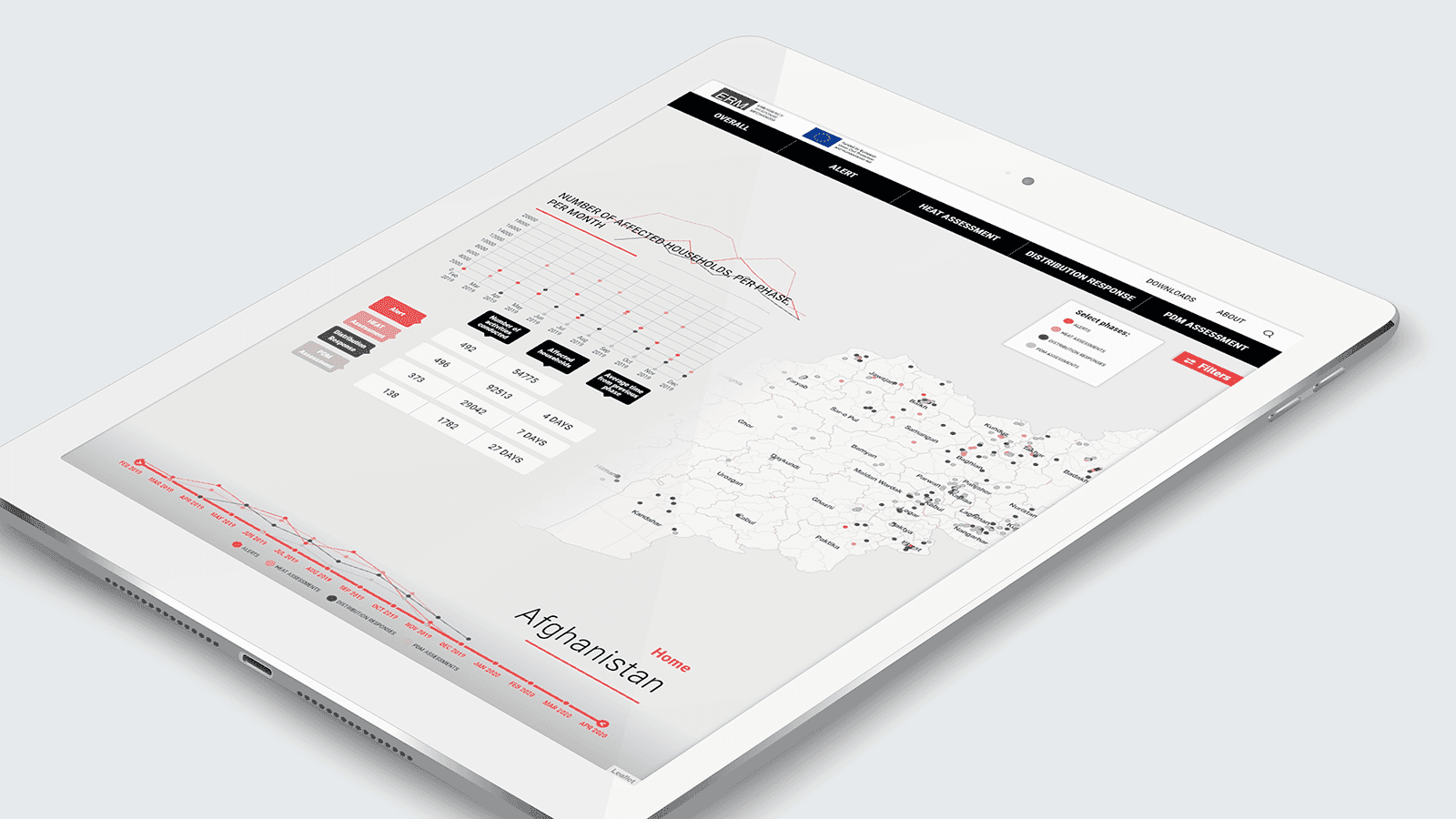
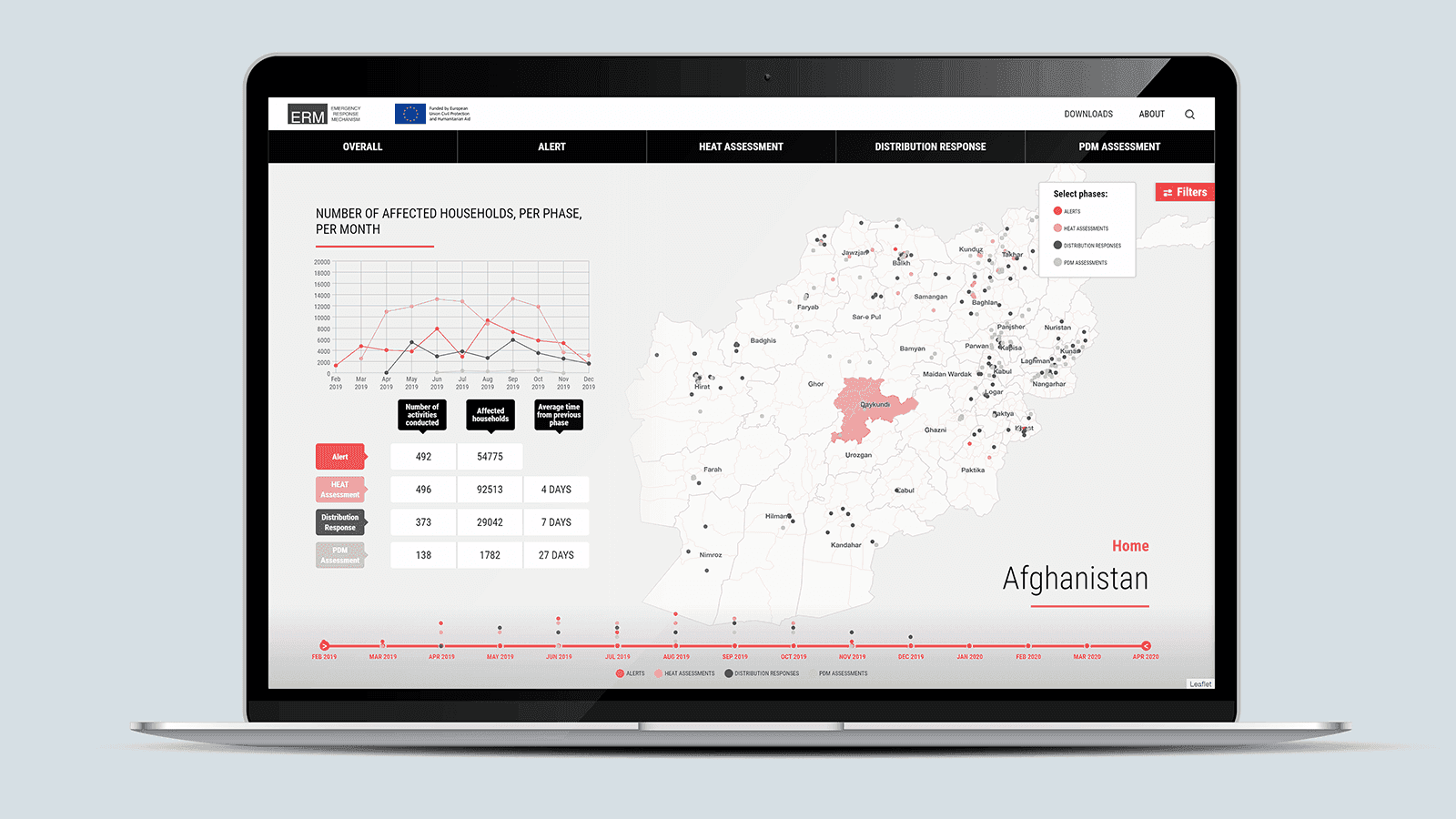
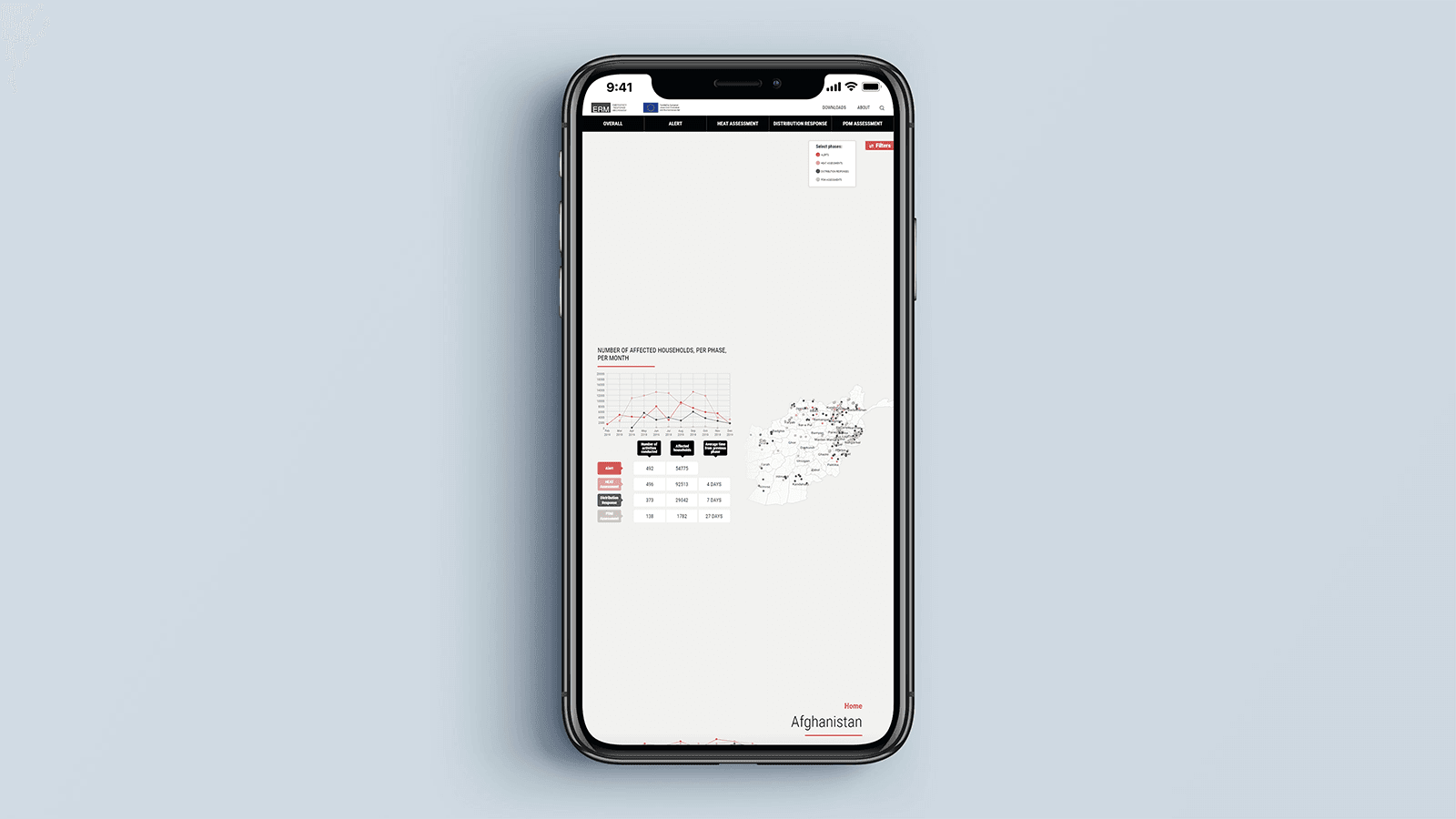
Increase accessibility and understanding of local data for humanitarian aid practitioners
IMPACT Initiatives, a prominent think-and-do tank, required a data visualisation portal for the Emergency Response Mechanism (ERM) Afghanistan to help aid practitioners understand the specific needs of local provinces and quickly identify districts with urgent requirements. WAAT was tasked with designing and developing a user-friendly platform to present complex data in an accessible way.
The brief: Distill complex data into clear, actionable insights
IMPACT required a data visualisation portal that translated complex and varied datasets into clear, digestible insights for aid practitioners. What’s more, they needed these visualisations to be able to be delivered in low-bandwidth environments as was the case in Afghanistan.
Digital solutions: Delivering clarity through data visualisation
-
Data analysis and visualisation design
Conducted an in-depth review of the available datasets to determine the most relevant data points and select appropriate graph types to effectively communicate complex information without oversimplifying it.
-
Rapid UX prototyping
Developed the website’s user experience (UX) within a week using rapid prototyping tools like Sketch and Zeplin, allowing for swift client feedback and iterative design improvements.
-
Technical deployment
Addressed the challenge of deploying the portal in Afghanistan, where internet connectivity is limited, by optimising the platform for low-bandwidth environments.
Outcome
The resulting portal provides real-time data in an easy-to-understand format, covering aspects such as household demographics, market functionality, and post-distribution analysis of humanitarian aid in Afghanistan’s provinces. Aid practitioners can now gain a quick overview of humanitarian needs across the country, enabling more effective and targeted responses.